Healthy Living · Food Choices
Crunchy but Occasional: Understanding Deep-Fried Foods
French fries, fried chicken, doughnuts, and chips can taste delicious. So why is it a good idea to enjoy deep-fried foods only once in a while?
What Does “Deep-Fried” Mean?
Deep-frying cooks food by completely or mostly submerging it in very hot oil. The heat makes the outside crisp and brown while the inside cooks quickly. That crackly texture and rich flavor are exactly why deep-fried foods are so tempting.
But frying changes more than texture. As food cooks in oil, it can absorb some of that oil. A potato is naturally a starchy vegetable, for example, but a serving of fries often contains much more fat and energy than a baked or boiled potato. The same is true for foods such as chicken, fish, or dough.

Why the Oil Matters
Oil is very energy-dense: a small amount contains a lot of calories. When fried foods become a frequent habit, it can be easy to eat more energy than the body needs without feeling especially full. Many fried foods are also served with sugary drinks or salty sauces, which can turn a snack into a large, less balanced meal.
Some fried foods contain more saturated fat than is helpful to eat often. Too much saturated fat over a long time may raise LDL cholesterol, which is one factor linked to heart disease. This is not a reason to panic about one meal. It is a reason to let fried foods be occasional treats instead of everyday fuel.
Salt, Cravings, and “Easy to Keep Eating”
Many deep-fried foods are heavily salted. Our bodies need a little sodium, but most people already get plenty from packaged and restaurant foods. Regularly eating a lot of salty foods can make it harder to stay within a healthy sodium range, especially when those foods replace vegetables, fruit, beans, and other nutrient-rich choices.
Fried foods are often designed to be crunchy, salty, and rich all at once. Those qualities make them satisfying in the moment, but also easy to keep eating past the point of hunger. A helpful habit is to notice the portion: enjoy a small serving slowly, then make room for foods that offer fiber, protein, vitamins, and minerals.
Very High Heat Changes Food, Too
Deep-frying uses very high temperatures. When starchy foods such as potatoes are cooked at high heat, compounds including acrylamide can form. Researchers continue to study exactly how these compounds affect people at different amounts, but the practical advice is simple: avoid making very browned or heavily fried foods a daily habit.
Oil also changes when it is heated for a long time or used again and again. At home and in restaurants, good food safety practices matter. For students, the main takeaway is not to worry about every crisp bite; it is to choose a wide variety of cooking methods most of the time.
Better Choices Can Still Be Delicious
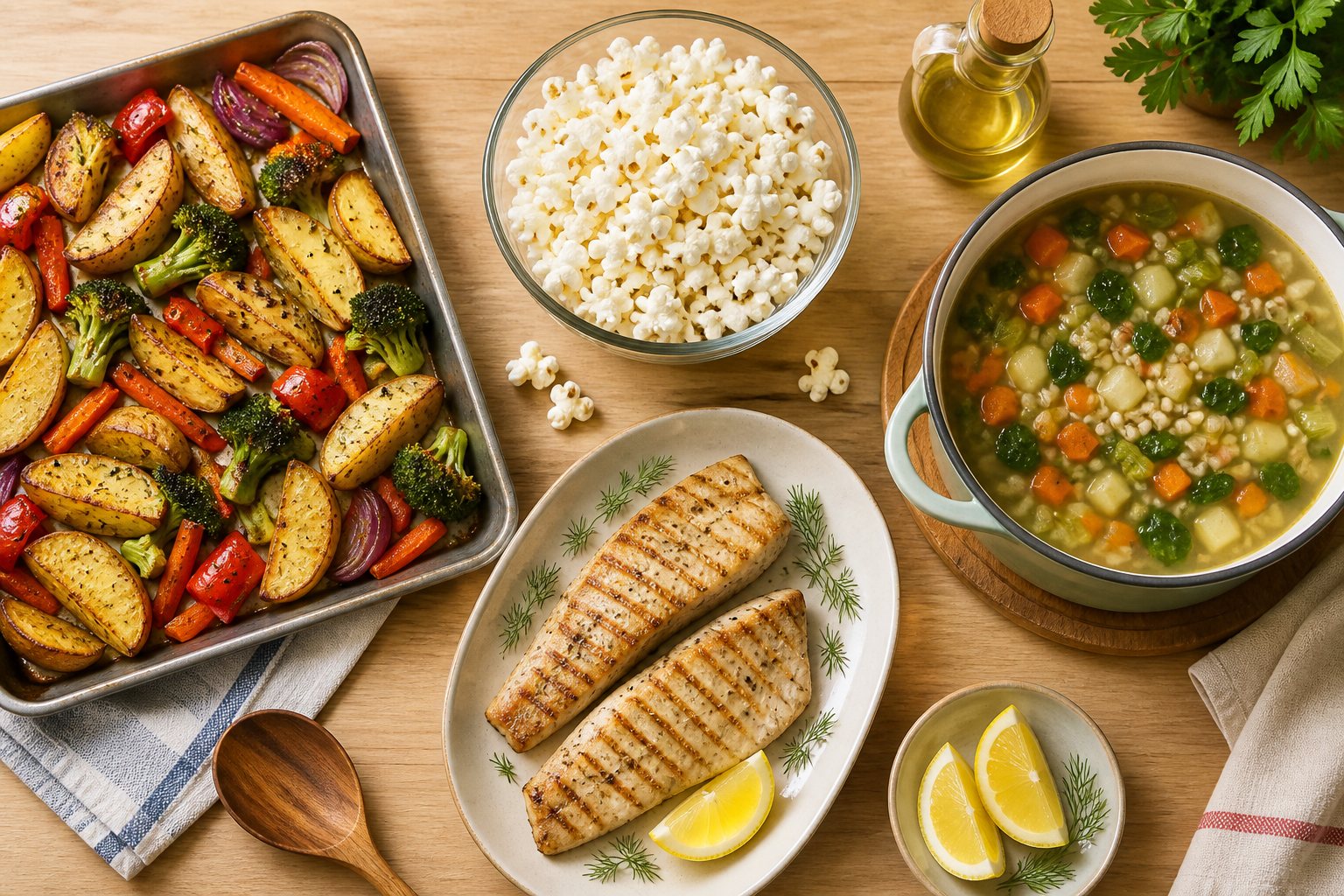
Avoiding too much deep-fried food does not mean eating boring food. Try oven-roasted potato wedges with spices, grilled or baked chicken, popcorn made with little or no added oil, vegetable stir-fries, soups, or a crisp salad with a flavorful dressing. These choices can still have color, crunch, and taste.
It also helps to think about the whole meal. If you choose fries at a restaurant, you might pair a small serving with water, a sandwich or entrée that includes protein, and fruit or vegetables when available. Healthy eating is not about guilt. It is about giving your body a good pattern of foods over time.
The Big Idea
Deep-fried foods tend to contain more oil, energy, salt, and sometimes saturated fat than foods cooked by methods such as baking or steaming. Frequent deep-frying can also mean missing out on fiber-rich, vitamin-rich foods. Enjoy fried favorites sometimes, but let everyday meals be built around a variety of minimally processed foods.
Quick Quiz
Choose the best answer for each question, then select “Check My Answers.”