Healthy Living · Sugars and Metabolism
Fructose and Glucose: Two Sugars, Different Routes
Both fructose and glucose are simple sugars, but the body handles them differently. Their sources, food form, and overall amount all matter.
Two Sugars in Everyday Foods
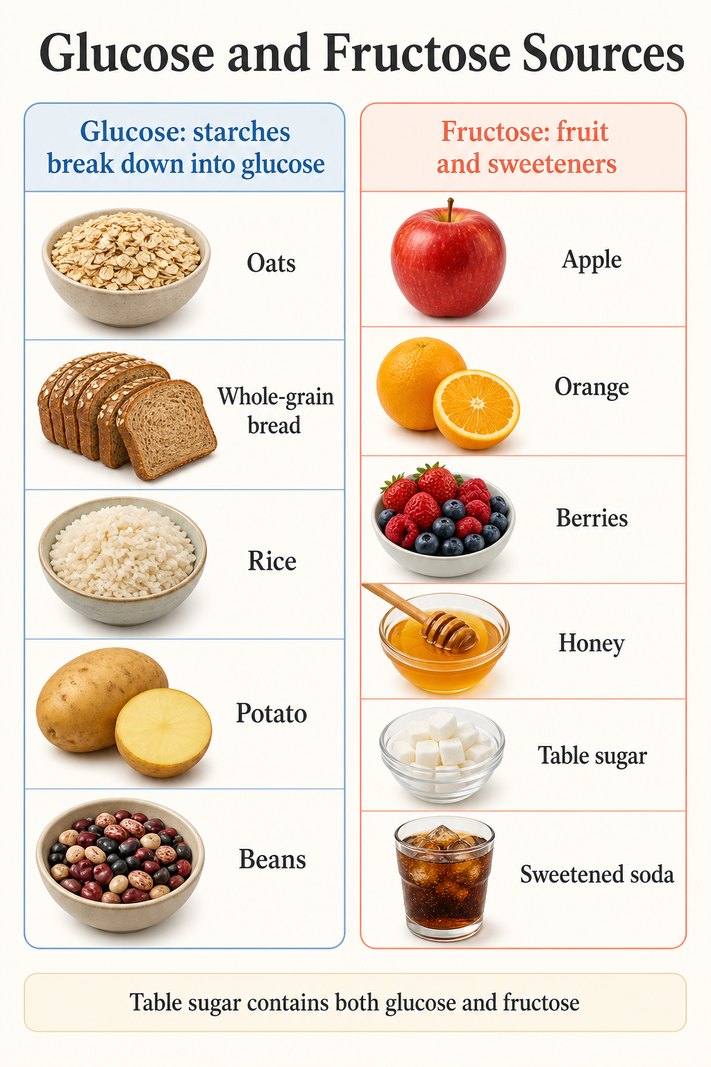
Glucose is the main sugar found in the blood and an important source of energy for cells. Starchy foods such as bread, rice, oats, potatoes, and beans are digested into glucose. Glucose also occurs in some fruits and sweeteners.
Fructose is naturally found in fruit and is sometimes called “fruit sugar.” It is also present in honey, table sugar, and many sweetened products. Table sugar, or sucrose, is made of one glucose unit joined to one fructose unit. High-fructose corn syrup also contains both glucose and fructose. That means a sweetened drink is usually not a “glucose versus fructose” choice—it may provide a mixture.
Digestion: A Shared First Stop
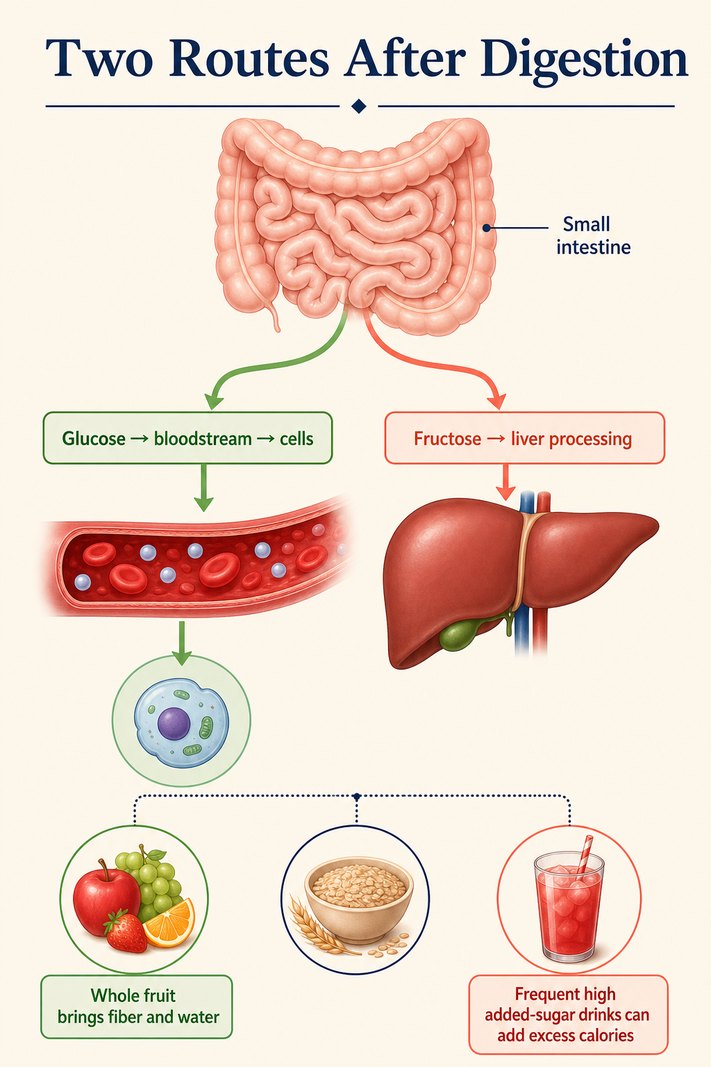
Both sugars are absorbed mainly in the small intestine. Starch digestion starts in the mouth and continues in the small intestine, where enzymes break starch into glucose. Sucrose is split into glucose and fructose by an intestinal enzyme. Once the sugars are small enough, they cross the intestinal lining and travel in the blood to the liver.
Fiber takes a different route. It is a carbohydrate, but human digestive enzymes do not fully break it down. Fiber can slow how quickly food is eaten and digested, which is one reason an intact apple differs from apple juice, even though both contain sugars.
Blood Sugar: Why Glucose Has the Familiar Name
“Blood sugar” usually means blood glucose. After a meal containing digestible carbohydrate, blood glucose rises. The pancreas releases insulin, a hormone that helps glucose enter cells for energy or storage. The speed and size of that rise depend on the whole food: its fiber, processing, portion, protein and fat content, and what else is eaten with it.
Fructose does not raise blood glucose as directly as glucose when consumed on its own, because much of it is processed first by the liver. But this does not make large amounts of added fructose automatically harmless. Sweetened foods and beverages often provide both fructose and glucose, add calories quickly, and may be easy to consume in large amounts.
The Liver: Processing, Not Panic
The liver receives absorbed simple sugars and helps decide what to do with them. It can use glucose, store some as glycogen, or release glucose later when needed. The liver also processes much of the fructose that arrives after a meal.
Research links frequent, high intake of fructose-containing added sugars—especially from sugar-sweetened beverages and excess calories—with higher liver-fat markers. That is different from saying that ordinary whole fruit causes fatty liver. Whole fruit brings fiber, water, vitamins, and minerals, and is generally recommended as part of a healthy eating pattern. Liver health also depends on overall diet, activity, body weight, alcohol use, medical conditions, and genetics.
Practical Choices
There is no need to fear either sugar molecule. Build most meals around minimally processed foods: whole grains, beans, vegetables, fruit, protein foods, and healthy fats. Choose whole fruit more often than juice, and choose water or unsweetened drinks more often than soda, sweet tea, energy drinks, or fruit drinks.
If you have diabetes, liver disease, or another condition that affects your diet, your clinician or registered dietitian can help tailor carbohydrate choices and portions to your needs.
Remember This
Glucose is the main blood sugar and comes largely from digested starches. Fructose is common in fruit and sweeteners and is processed mainly by the liver. In real life, focus less on one molecule and more on food form: whole fruit and whole grains are different from large amounts of added sugar in drinks.
Quick Quiz
Choose the best answer for each question, then select “Check My Answers.”