Healthy Living · Nutrition Basics
Two Kinds of Fat: Saturated and Unsaturated
Fat is not one single thing. Foods contain different kinds of fat, and knowing the difference can help us make practical choices without making any food seem “forbidden.”
Why Does the Body Need Fat?
Fat gives the body energy, helps protect organs, helps build cell membranes, and helps us absorb vitamins A, D, E, and K. The question is not whether to eat fat. It is which sources to choose most often and how those choices fit into the whole eating pattern.
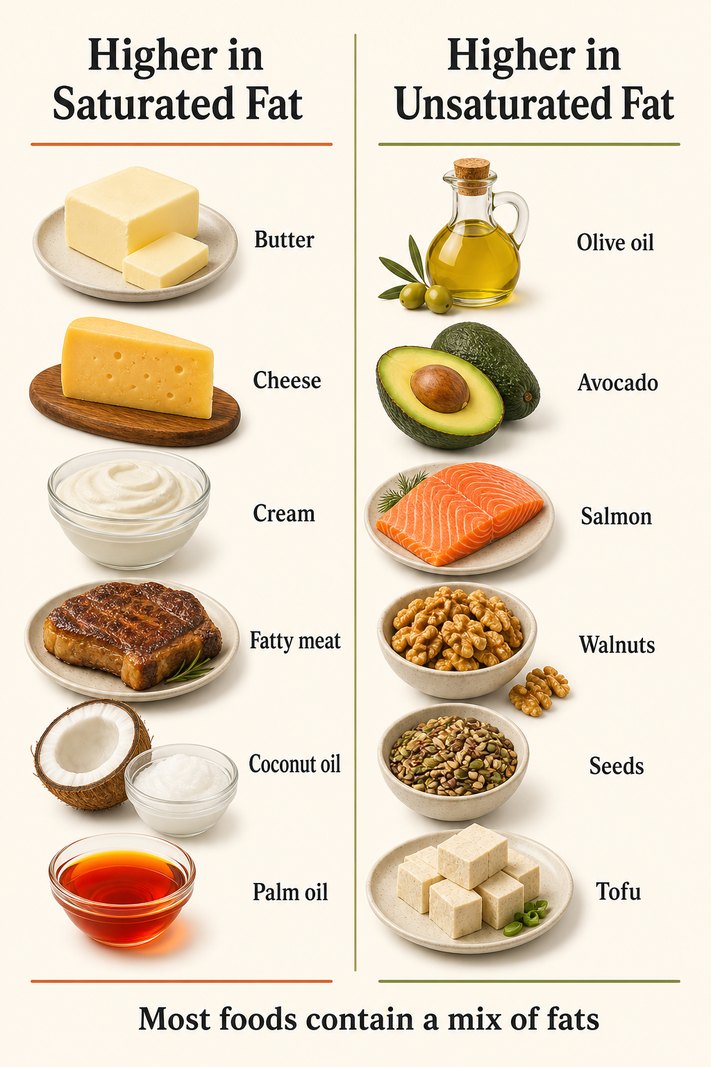
Most foods contain a mixture of fats. Butter, for example, has mostly saturated fat but also a smaller amount of unsaturated fat. Olive oil has mostly unsaturated fat but is not completely free of saturated fat. It is more useful to think of foods as higher in one kind of fat than to call them all-good or all-bad.
Saturated Fat: Common Sources
Saturated fats have a chemical structure with no carbon-carbon double bonds. They are often solid at room temperature, though this is not a perfect rule. Foods higher in saturated fat include fatty cuts of beef or pork, sausage and other processed meats, butter, lard, cream, cheese, and full-fat dairy products.
Some plant foods are also high in saturated fat. Coconut oil, palm oil, and palm-kernel oil are examples. This is a useful reminder that “plant-based” does not automatically mean a food is high in unsaturated fat. Reading the Nutrition Facts label and ingredient list can help when choosing packaged foods.
Eating a lot of saturated fat can raise LDL cholesterol in the blood. Higher LDL cholesterol is one factor that can raise heart-disease risk over time. For this reason, many health guidelines suggest limiting saturated fat and replacing some of it with unsaturated-fat sources when possible.
Unsaturated Fat: Two Helpful Families
Unsaturated fats have one or more double bonds in their chemical structure. They are often liquid at room temperature. There are two main families: monounsaturated fats, which have one double bond, and polyunsaturated fats, which have more than one.
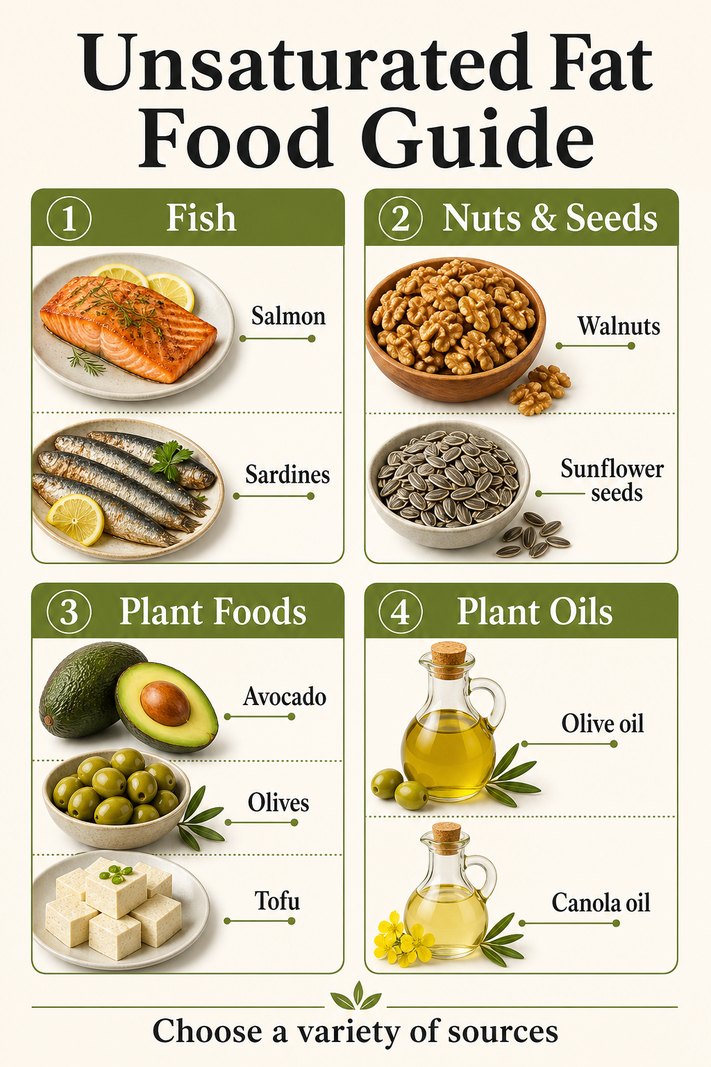
Olive oil, canola oil, avocados, olives, peanuts, and many nuts are higher in monounsaturated fat. Polyunsaturated fats are found in sunflower, soybean, corn, and safflower oils; walnuts; seeds; tofu and soy foods; and fatty fish such as salmon, sardines, and trout. Some polyunsaturated fats, including omega-3 and omega-6 fats, are essential: our bodies need them but cannot make them in sufficient amounts.
When unsaturated-fat foods replace foods high in saturated fat, they can help lower LDL cholesterol and support heart health. The replacement matters: swapping butter for olive oil or a fatty processed meat for beans, fish, or nuts is different from replacing either one with a sugary snack.
How to Compare Everyday Sources
Imagine a sandwich. Butter and full-fat cheese are higher in saturated fat. Avocado, hummus, or a small amount of olive-oil-based spread can add creaminess with more unsaturated fat. For dinner, a person might sometimes choose salmon, beans, or tofu instead of a fatty processed meat. These are swaps, not rules that need to be followed perfectly.
Amount still matters because all fats are energy-dense. A small handful of nuts or a spoonful of oil can be part of a balanced meal, while large amounts of any oil can add up quickly. The best pattern includes vegetables, fruits, whole grains, protein foods, and varied sources of healthy fats.
Remember This
Saturated fat is found more often in fatty meats, full-fat dairy, butter, and tropical oils. Unsaturated fat is found more often in fish, nuts, seeds, avocados, tofu, and many liquid plant oils. Rather than trying to remove all fat, choose unsaturated-fat sources more often and keep the whole meal in view.
Quick Quiz
Choose the best answer for each question, then select “Check My Answers.”